
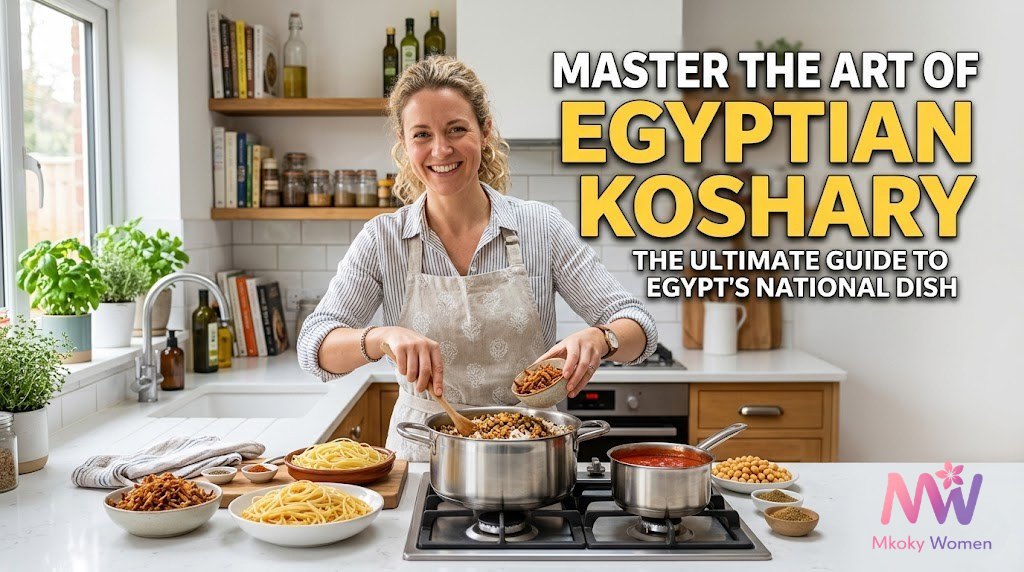
Learn how to make the perfect Egyptian Koshary at home. Our professional guide covers everything from crispy onions (Warda) to the tangy garlic Daqqa. Discover the secrets of Egypt’s favorite street food in this comprehensive 1,000-word article.
Mastering Authentic Egyptian Koshary: The Ultimate Step-by-Step Guide to Egypt’s National Dish
If you were to walk through the bustling streets of Cairo, the rhythmic sound of metal spoons clanking against stainless steel bowls would lead you to one place: a Egyptian Koshary shop. Known as the national dish of Egypt, Koshary is a masterclass in culinary fusion. It is a hearty, vegan-friendly bowl that combines lentils, rice, pasta, and chickpeas, all topped with a vinegary tomato sauce, a signature garlic dressing, and a mountain of crispy fried onions.
While it may seem like a simple carb-heavy meal, the secret to a truly professional Koshary lies in the details—the balance of spices, the texture of the grains, and, most importantly, the flavored oil used throughout the cooking process. In this guide, we will break down the history, the ingredients, and the professional techniques required to recreate this Egyptian masterpiece in your own kitchen.
The Cultural Melting Pot: A Brief History of Koshary
Despite being synonymous with Egypt, Koshary’s origins are a fascinating reflection of the country’s history as a global crossroads. The dish is believed to have evolved during the 19th century, drawing influences from three distinct culinary traditions:
-
The Indian Influence: British soldiers brought “Khichdi”—a dish of rice and lentils—to Egypt during the colonial era.
-
The Italian Influence: Italian migrants living in Egypt introduced various types of pasta to the mix.
-
The Egyptian Adaptation: Local cooks added the tangy tomato sauce (Salsa), the spicy chili (Shatta), and the sharp garlic-vinegar (Daqqa) to create the flavor profile we recognize today.
Over time, it transitioned from a humble working-class meal into a national obsession, served in everything from multi-story restaurants like the famous Abu Tarek to small street carts.
The Secret Ingredient: The Power of Onion-Infused Oil
Before you look at the ingredients list, you must understand the “Golden Rule” of professional Egyptian Koshary: The Oil is King. Unlike home cooks who might boil everything in plain water, professional chefs start by frying a large batch of thinly sliced onions until they are deeply caramelized and crispy. This oil—now infused with the sweet, savory essence of the onions—is then used to cook the rice, sauté the garlic for the sauce, and even coat the pasta. This creates a cohesive thread of flavor that ties the entire dish together.
Ingredients You Will Need
To make an authentic Egyptian Koshary that serves 4 to 6 people, you will need to organize your kitchen into the following components:
1. The Crispy Onions (Warda)
-
3 large white or yellow onions (thinly sliced into rings or half-moons)
-
2 tablespoons cornstarch (for extra crunch)
-
1 teaspoon salt
-
1.5 cups vegetable oil (for deep frying)
2. The Grains & Legumes (The Base)
-
1.5 cups Egyptian short-grain rice (or Calrose rice)
-
1 cup brown or green lentils (washed and picked)
-
½ cup vermicelli (She’reya)
-
1 cup ditalini or elbow macaroni
-
½ cup broken spaghetti (optional, but traditional)
-
1 can (15 oz) chickpeas (rinsed and drained)
3. The Tangy Tomato Salsa
-
4 cloves garlic (minced)
-
2 tablespoons tomato paste
-
2 cups tomato sauce (passata or blended fresh tomatoes)
-
3 tablespoons white vinegar
-
1 teaspoon ground cumin
-
1 teaspoon ground coriander
-
Salt and black pepper to taste
4. The Signature Daqqa (Garlic Vinegar Sauce)
-
5 cloves garlic (crushed)
-
½ cup white vinegar
-
½ cup warm water
-
1 tablespoon ground cumin
-
A pinch of red chili flakes (optional)
5. The Shatta (Hot Sauce)
-
1 tablespoon of the prepared tomato salsa
-
1 teaspoon red chili powder or flakes
-
1 tablespoon of the onion-infused oil
Step-by-Step Cooking Instructions
Step 1: Preparing the Crispy Onions (The “Warda”)
This is the most important step. Toss your thinly sliced onions with cornstarch and a pinch of salt. In a large pot or deep pan, heat the oil over medium-high heat. Fry the onions in batches until they are a deep golden brown. Do not let them burn, as they will continue to darken slightly after being removed. Drain them on paper towels.
Pro Tip: Once cooled, they will become incredibly crunchy. Set aside the oil; you will use it for every subsequent step.
Step 2: Cooking the Lentils and Rice
In a medium pot, cover the brown lentils with water and bring to a boil. Simmer for about 15–20 minutes until they are “al dente” (firm to the bite). Do not overcook them into a mush. Drain the lentils but keep the cooking water for the rice if you want a deeper color.
In another pot, heat 2 tablespoons of the onion oil. Sauté the vermicelli until it turns golden brown. Add the washed rice and the pre-cooked lentils. Pour in the water (or the lentil water), add a teaspoon of cumin and salt, and cook until the rice is fluffy and the water is absorbed.
Step 3: Preparing the Pasta
Boil the macaroni and spaghetti in salted water according to the package instructions. Once drained, toss them with 1 tablespoon of the onion oil. This prevents sticking and adds that subtle onion aroma to the pasta.
Step 4: Crafting the Tomato Salsa
Heat 2 tablespoons of onion oil in a saucepan. Sauté the minced garlic until fragrant. Add the tomato paste and stir for a minute, then pour in the tomato sauce and vinegar. Season with cumin, coriander, salt, and pepper. Let it simmer on low heat for 15 minutes until the sauce thickens and the flavors meld.
Step 5: The Daqqa and Shatta
For the Daqqa, simply whisk the crushed garlic, vinegar, cumin, and warm water in a small bowl. This sauce is not cooked; its raw garlic and vinegar punch is what cuts through the richness of the carbs.
For the Shatta, heat a small amount of oil in a tiny pan, add the chili flakes until they sizzle, then stir in a ladle of the tomato salsa. Be careful—the fumes will be strong!
The Art of Assembly
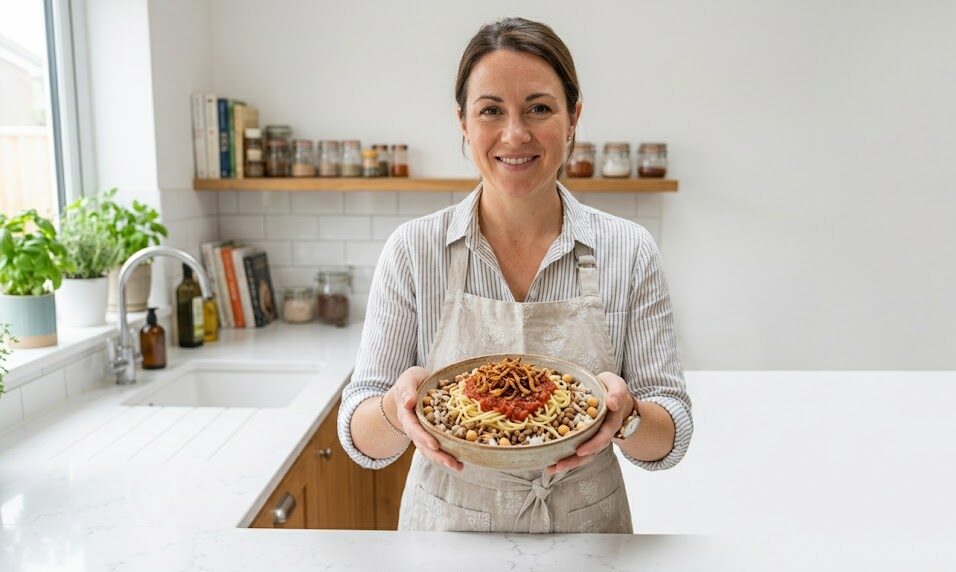
A professional Egyptian Koshary is all about the layers. To serve:
-
The Base: Start with a generous layer of the rice and lentil mixture.
-
The Middle: Top with a layer of the cooked pasta.
-
The Sauce: Pour a healthy ladle of the warm tomato salsa over the center.
-
The Garnish: Sprinkle a handful of chickpeas and a massive pile of the crispy fried onions on top.
-
The Finishing Touch: Serve the Daqqa and Shatta on the side, allowing each person to customize the acidity and heat levels.
Nutritional Value and Dietary Benefits
Beyond being delicious, Egyptian Koshary is a nutritional powerhouse. Because it combines grains (rice/pasta) with legumes (lentils/chickpeas), it provides a complete protein source, making it an ideal meal for vegetarians and vegans. Lentils are high in iron and fiber, while the garlic and cumin used in the sauces offer digestive benefits and antioxidant properties.
Conclusion
Mastering Egyptian Koshary is a rite of passage for any lover of international cuisine. It is a dish that proves how simple, affordable ingredients—when treated with respect and the right technique—can create something truly world-class. By using the onion-infused oil and layering your textures carefully, you can bring the authentic taste of a Cairo Koshary shop directly to your dining table.
Whether you are cooking for a large family gathering or looking for a healthy, meal-prep-friendly vegan option, this Koshary recipe is guaranteed to impress.
Do you prefer your Egyptian Koshary with extra Daqqa or a lot of Shatta? Let us know in the comments below!
- Egyptian Koshary
- Egyptian Recipes
- Vegan Egyptian Food
- Middle Eastern Cuisine
- Street Food Recipes
Leave a Reply